

.jpg)
A worker may wear ear plugs incorrectly and receive far less protection than expected.
Ear plug fit testing helps:
-
Verify actual protection levels
-
Ensure compliance with hearing conservation programs
-
Reduce risk of permanent hearing loss
-
Improve worker education and fitment
Common Hearing Risks Employers Are Trying To Prevent:
-
Noise-Induced Hearing Loss
-
Tinnitus
Ear plug testing is essential for workers exposed to hazardous workplace noise, including people in industry, mining, construction, manufacturing, workshops and the trades. While hearing protection may look simple, ear plugs only work properly when they are correctly selected, inserted and fitted to the individual worker’s ear.
Fit Test Victoria provides professional ear plug fit testing in Melbourne, helping employers verify that their hearing protection is providing the right level of noise reduction before long-term hearing damage occurs. Regular hearing protection fit testing can identify poor insertion technique, incorrectly sized ear plugs, over-protection, under-protection and gaps in workplace training, giving businesses greater confidence that their noise control measures are actually protecting workers.
For teams exposed to machinery, tools, heavy equipment, impact noise or high-noise environments, ear plug testing is a practical way to improve workplace safety, support compliance obligations and help prevent noise-induced hearing loss before it becomes permanent.
In Australia, Ear Plug Testing is commonly linked to:
-
Hearing conservation programs
-
Occupational noise management plans
-
WHS obligations
-
Mining compliance
-
AS/NZS hearing protection standards
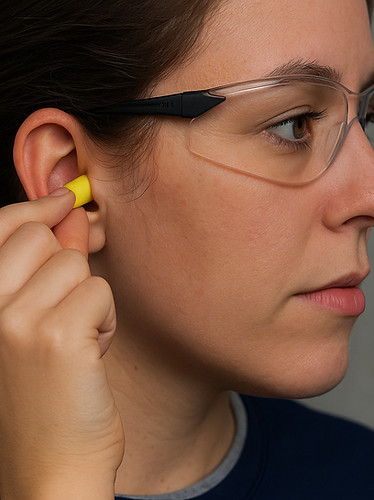
Hearing protection only works if it fits. Fit testing ensures your ear plugs or ear muffs are providing their intended level of protection and occupational hearing conservation for workers at risk of permanent hearing damage.
At our Oakleigh office, we test ear plugs and ear muffs via an objective and quantitative/Field Microphone-in-Real-Ear (MIRE): An objective method using specialised equipment, such as the 3M E-A-Rfit and VeriPro Validation Systems.
-
A special probe microphone is placed inside the ear canal.
-
An earplug (with a microphone tube inserted) is fitted.
-
The system measures the sound level inside and outside the ear to calculate the PAR across7 frequencies (125 Hz - 8 kHz) in seconds.
Fit test certificates issued same day.
Who needs ear plug fit testing? Every industry and in many job roles, workers can be exposed to loud, repetitive noise resulting from machines and impact of materials.
They may be exposed to:
-
Heavy machinery
-
Power tools
-
Compressors
-
Generators
-
Aircraft engines
-
Grinding and cutting equipment
-
Explosive blasting
-
Industrial presses
-
Chainsaws
-
Pneumatic tools
-
High-volume manufacturing
-
Turbines
-
Metal impact noise
-
(many more)
Anyone who wears hearing protection should have their ear plugs or ear muffs fit tested.